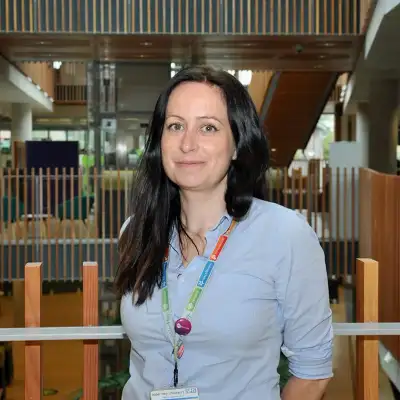
Episode 10: Louise Oni and Jun Oh
Episode 10: Louise Oni and Jun Oh
===
[00:00:00]
Laurel Damashek: Welcome to GN in Ten, a bite sized podcast brought to you by the International Society of Glomerular Disease. Our hosts are nephrologists and glomerular disease experts Dr. Kenar Jhaveri of Northwell Health and Hofstra University on Long Island, New York, and Dr. Koyal Jain from the University of North Carolina Chapel Hill.
Kenar Jhaveri: Welcome to GN 10 with Koyal Jain and myself. We have a special episode today that Koyal is going to introduce. We are gonna call it the Ped's GN in Ten. It's gonna really take us to the pediatric glomerular disease world
Koyal Jain: yes. We're excited about this because we've really not talked about pediatric patients as much, but they're really important. Kids are so close to my heart, and then we have these amazing pediatric nephrologists who've joined us, we have Jun Oh and Louise Oni who will be talking about some updates in pediatric glomerular diseases.
So why don't you both tell us about yourself and how did you [00:01:00] get involved in glomerular diseases?
Louise Oni: Thanks for the warm welcome and for putting the spotlight on the children, which is a real privilege and we're very grateful to be here. I'm Louise Oni. I'm a professor of pediatric nephrology. I'm working in Great Ormond Street at Children's Hospital in London and I support one of the large glomerular disease clinics there and also the Nephrotic Syndrome Clinic for children.
And have a research interest in glomerular diseases and work very closely with our adult colleagues to look at glomerular nephritis across the ages. My interest was first from doing a PhD in lupus nephritis and working very closely with our pediatric rheumatology colleagues.
And have continued to have that interest over the last couple of decades. And now chair the ESPN Glomerular Disease Working Group, where we have a really active group of members all interested in trying to drive forward the progression for children with inflammatory kidney diseases.
Jun Oh: And I'm Jun Oh, I'm a professor of pediatrics from University of Hamburg in Germany. And thank you for inviting us and give [00:02:00] pediatricians the platform to talk about, our side of glomerular diseases and involvement in the changes we are currently facing, which is amazing for us taking care of so many patients with rare diseases and ultra rare diseases.
My interest in proteinuria started over 20 years ago when I started working at Peter Mundel's lab starting on the first, baby steps of the podocytes and now I'm more involved in clinical trials rather than, looking what the individual podocytes are doing.
It's just great to see that, what we did there and entering into development of drugs and now, ending with target drugs and clinical trials, which is an amazing journey and particularly for us as pediatricians, this is just a unique time I think.
Koyal Jain: Welcome both of you. We're so excited to have you.
Kenar Jhaveri: Alright So we'll get started. Just to clarify, Louise was mentioning ESPN. That's not what we think it is. It's actually European Society of Pediatric Nephrology, just in case people are thinking sports. So let's start with C3G, which is a pretty happening topic in the adult world with two new trials that just [00:03:00] splashed in ASN.
What do you think Louise or Jun Oh, about the role of any of these drugs in C3G in pediatric patients?
Louise Oni: Yeah, a really exciting time for us. I think one of the advantages and also perhaps one of the disadvantages with pediatric nephrology is that there is a lag to the drugs reaching the children. That has its advantages in that we can see what's coming and what opportunities lie there for our patients.
But also we see that then there might be a delay in them reaching the actual children who might have disease. And so what we see is a really exciting time when the trials are just coming to the children. You've got the results In the adults, we can see the fantastic outcomes.
We have no reason to believe that the children wouldn't respond in anything differently to what the adults have responded. So it's a really exciting space to open up much more targeted treatments for C3 Glomerular nephropathy and also provide children the opportunity to take part in evidence generation.
So for us, we are on the edge of that energy and that excitement that you've got, the actual figures and the results. So we are just at [00:04:00] the beginning of that wave of excitement in the next generation of medications. So really important time for our specialty and for our patients.
And what we hope to do is really deliver on those trials so that the children get the evidence they deserve as well.
Jun Oh: There's one thing which might be different from our adult colleagues. It is a rare disease. And particularly in children we have smaller centers it is so important for us that we connect to each other and work together.
So that's why this international collaboration coming together and sharing data, and sharing patients is really important for us. Because we only have few patients in individual centers. To exchange experience and also to learn from each other.
There is this need for coming together and connecting.
Kenar Jhaveri: Just for our listeners, the two drugs we are talking about is iptacopan and pegcetacoplan. I can never say that one, but the iptacopan trial did not include any pediatric patients to my knowledge, the peg cetacoplan had kids above the age of 12. So not very little kids, but at least above 12.[00:05:00]
That should help the pediatric colleagues The trial's not published yet, but I'm assuming pretty soon the data will be very good for our kids to get those drugs as first line therapy, and not just MMF and steroids.
Koyal Jain: Sorry to take a step back though, you're both coming from two different countries. What are you right now using and what are people using worldwide for pediatric patients? For C3G?
Louise Oni: I am afraid. That's where the lag comes into this. And on average what we've seen from previous historical studies is that there's a 13 year gap between the drugs reaching the adults to reaching the children. So unfortunately, in clinical practice, we're still using steroids, MMF very broad spectrum immunosuppression.
So we don't have the access to these drugs. We're excited by the trials coming through. But , even in the luxury of the centers that we work in we don't have access to these drugs for our clinical practice. We're still using very broad spectrum medications and children really don't like the side effects that are experienced particularly from steroids.
I think [00:06:00] in terms of what's actually changed our clinical practice right now. Nothing's changed for some time. What we can see, and particularly as clinical academics, is that's on the horizon and that's exciting.
Jun Oh: Also for security reason, right? You have to convince parents and also you have to be convinced by yourself as a treating physicians that it's safe to give this drug to a child for a long time. So far, these are also new drugs for our adult, world.
But, you can talk to your patients, they decide for themselves, in, in our hands, it's a little bit different, right? We have to be really sure that there are no long-term side effects. So what we are doing now is following what you're doing. Following your results and try to understand how we can use this.
Some of the drugs will work the same way better, but some of the drugs will maybe have a less, strong effect. Let's say the immune system in a child is different from an adult. It's maturing, it's developing. So there might be some difference. So we're talking about kidneys at a young age in comparison to kidney.
At an old age, which means the [00:07:00] structure the function might be different, right? So the impact can be different. So we are following and we have to learn, but what we are trying to do is to shorten this delay and try to be, as fast as we can to prove that these drugs are actually also, safe for the children
Kenar Jhaveri: so I wanted to shift gears a little bit. The other big news splash, at least in the adult world, has been the use of SGLT2 inhibitors for almost all proteinuric diseases, from glomerular diseases to diabetic kidney disease to FSGS. Do you use SGLT2 inhibitors
Louise Oni: It might take more than 10 minutes to talk through the SGLT2 inhibitors. What happens in adult trials is. There will be a pediatric investigation plan linked to it that our regulators will impose needs to be done so that the children can access some of the medications or at least the trials.
Unfortunately sometimes waivers are placed to say that this study can't be done or isn't safe or there are some reason why the regulators feel that the study shouldn't be done. And [00:08:00] so for most of the SGLT2 inhibitors our industry colleagues got waivers that meant that the trials wouldn't proceed with children.
So that led to a really big global community coming together to try and actually work with regulators, work with industry, work with patients. And together we've now put a really fantastic trial protocol that's gonna open shortly to evaluate SGLT2 inhibitors in children with all forms of CKD no matter what the etiology is.
It took a very big global effort to bring that together, but I actually think it united our community and also brought in the expertise from our adult colleagues, which we really do depend on in pediatrics. 'cause we are a small community. And actually the drugs often do reach the adults, quite rightly first.
And so we have to learn from the expertise that exists in adult nephrology. I think there was a lot that was learned from that situation. What's happened in clinical practice is that some teenagers will be prescribed them off label because we know that they're probably gonna work in the same way as an adult.
But the younger children don't have access to them at the minute. Hopefully those trials will [00:09:00] get delivered quickly. And then we'll have the evidence again that children deserve and we can start to use them more freely.
Jun Oh: We have to mention your role, Louise. It's thanks to your, hard work and the support and, partner with, institutions like Nephcure. This is moving forward. So me as a pediatrician, I have to thank you without your activities and your passion to perform this clinical trial.
We wouldn't be there at this point. So we are really looking forward to learn as a pediatrician, when we just think about, the impact for the adult population, if you just theoretically calculate what this could mean for a child at the age of one year and starting to have a glomerular disease, what this means, maybe at the end of his lifetime, this is just
wonderful.
Louise Oni: It's really hard to see children spending years on dialysis. You can't buy back that childhood. So the thought of any treatment that's able to buy children any amount of time to preserve their childhood and push that kidney failure endpoint into adulthood is a real exciting time for us.
And we see that with the treatments [00:10:00] coming through for glomerular diseases, we see that with the SGLT2 inhibitors in adults. And so as our community, we feel that for the children that there is hope that they might, some of them might get some childhood back because it, there are too many childhoods lost at the minute, kidney failure and sitting on dialysis, and it's not acceptable.
Koyal Jain: Thank you so much for your work. It sounds like you've put a lot of effort into this. What age group is this new clinical trial, the global clinical trial in.
Louise Oni: Two to 17 year olds. Hopefully we can capture everybody and make sure that they're safe in the younger population. And obviously the best way to evaluate the safety of a drug is within a clinical trial setting. So we will hopefully get the answers that gave everybody the nervousness at the beginning to hold off.
Hopefully it'll be a landmark trial for our community as well, which would be great.
Koyal Jain: So I feel like the theme for this has been that we need more clinical trials and more involvement in the pediatric population, which brings me to two other diseases where we have so many therapies in the adult population that [00:11:00] have suddenly come out in the past few years. IgA Nephropathy, and FSGS, but what's been happening in the pediatric population?
Jun Oh: We have this current situation that we are, already participating in, some of the trials. Numbers is still so much lower in comparison to the adult patient population. But still there's a growing clinical trials finally for us.
We have multiple trials, coming to our centers,
but it's a lot and the patient population is not so large. So we have to, make sure that we can complete all this connected drives, and that's what we are trying to do. To complete the trials, to get finally this information, whether, a drug is safe or and successful.
For
Kenar Jhaveri: IgA nephropathy at this point for pediatric patients, mainly supportive care and steroids.
Louise Oni: Yeah, we're, we are seeing the trials like Sparsentan and some of the early trials that came through. We're starting to get conversations of advisory boards and starting to help with the design. We know the treatments are coming, the challenge is gonna be making sure we can [00:12:00] deliver and capture these rare disease patients within trial networks.
And that's really. Potentially gonna be a huge opportunity for our specialty to start to come together globally and develop these networks, develop registries where we have patients captured, and also learn from what potentially has happened where you now have a whole plethora of treatments and know kind of way to biologically categorize patients.
And actually, we might be able to collect bio samples at the same time that would allow us to learn whilst we do. There is some advantage to that lag that we can actually see where we might be able to add on additional information that could help us with prescribing in the future. It's an exciting time.
I think it's also a nervous time as to whether we can deliver all of these trials, because if we can't and many trials don't manage to recruit then the children won't get the licensing that they deserve. It is important that we try and get the right evidence that allows 'em to get the proper tag.
That means that these treatments are safe and effective for them. And unfortunately, about a third of clinical trials will be [00:13:00] terminated due to poor recruitment. So we have a lot on our plate. We also are a small community and we've started in partnership with colleagues at ISGD trying to train the next generation of colleagues to be principal investigators, to think about clinical trials and start to get that energy
Jun Oh: and another initiative we started within the ISGD group is actually to build a subgroup of pediatricians. To use this platform, to bring these people from all over the world together and to connect and to make sure that we find these patients in various centers and find a way how we can include them into clinical trials.
So we just started at the ESPN meeting in Athens to find, the right persons to come together and work on this because I think this is now a unique time, but we are complaining all the time about this missing trials and now they're there. So now we have to show that we are capable of, completing these trials.
So there's a pressure also on our side as physicians to deliver. Finally, and I think we have to use this, let's say 10, 15 years, where a lot of, changes will happen in this field, and if we don't [00:14:00] deliver, the farmer may, move to a different field.
And so that's why I think this connection is what, as an example, this pediatric, subgroup in ISGD is developing and I think that if people are interested they just can reach out and participate in this, which is currently Louis and I trying to set up together with the leadership team of ISGD.
Koyal Jain: I will be very honest when we were coming up with some of these questions for you all
I was hoping that there'll be some like, oh, these are these great trials and these are the results and this is the new drug. But it seems like we still have so much room for improvement in terms of the number of clinical trials needed and the recruitment needed and the results needed that we're not there.
I feel like I was a little bit naive. I knew that clinical trials were needed in the pediatric population, but not to this degree.
Kenar Jhaveri: Since you both are on, I have more questions,
We use a lot of rituximab and obinutuzumab in our FSGS Lupus nephritis patients. And given your experience, what [00:15:00] is the role of such drugs in pediatric patients? So are they commonly used?
Jun Oh: Rituximab, we gain more and more experience. This is commonly used and over. It's, it started to catch up and, again we were discussing a lot in our, pediatric cohorts about the long-term use of rituximab.
So that's what we are always discussing at this point with these drugs are so new. But still we are still lacking this long term, information is what's happening. But it's growing
Louise Oni: Yeah, we don't understand, like we have children now who maybe have had B cell depletion for 10 years of childhood and what does that mean to them? Is there a reason why they actually get those viruses, get those infectious insults, and the B cells are exposed to that. And actually what we're doing is depleting them.
So what we don't know is whether we're setting them up to have challenges in adulthood, and that's where our very long-term registries are gonna be beneficial. So there's a lot unknown, but we do use them widely. We have to use them. Otherwise the children will be quite sick. We use 'em particularly in lupus, particularly [00:16:00] Nephrotic syndrome.
But rituximab is there when we need it for more severe, rapidly progressive disease as well. Because one of the subtle differences compared to adults is that we strive for complete remission. And we strive to treat them with immunosuppression even if we feel that they may have irreversible histological features.
So we really do try to fight for that time off dialysis as much as possible. And often you'll see that we use lots of immunosuppression if they're really quite ill. And that's often because we do see reversibility. A couple of months of dialysis is a benefit to a child.
I think one of the other missed opportunities as well in pediatric glomerular diseases is that the children are really clean phenotype. They've not got the comorbidities, they've not got diabetes, they've not got hypertension. So for science, they're a really clean group of patients where they have a very
severe inflammatory disease and they were previously well. So trying to capture that in cohorts and learn from it, I think is a huge unmet need. And we saw that really nicely when the anti-nephrin studies [00:17:00] were really inclusive of all the ages and the children really dominated that positive antibody group actually.
So I don't think we've done that at scale properly yet, and I think that's an unmet need where we should be looking at. These children looking at their immunology and trying to capture it. Because often we see very acute severe disease, even like IgA, nephropathy, FSGS and the children can progress quite rapidly to chronic kidney disease with significant proteinuria.
Jun Oh: We have this genetic information in many of our patients. That's also a big advantage because we are screening so much more. So we have a lot of genetic information in all these patients.
I think what's gonna happen is 10 years from now, we will have genetic newborn screening all over, which means that we have a lot of genetic testing in all children. And now we have to understand which of these mutations have an impact on the long-term outcome of these children.
And then because of the drugs we are gonna have, we have to [00:18:00] decide whether we can use these expensive drugs, even though we don't know whether, this child will have a phenotype. So 10 years from now, rather than treating these patient and they will transition to you, it's rather prevention because we will have a lot of information from the first day of life.
So I think that's why I think we as a pediatrician and you as adult physicians, we have to join and think about the next 10 or 15 years. Because everyone will run with some diagnosis. And there will be a lot of, people nervous because they have to make decisions.
And I think this is something now this next 10, 15 years, we are really important to be prepared for this situation.
Koyal Jain: Jun based on what you said, and this came up at ASN as well, at least in US, you depend so much on life insurance and those policies and they take into account if you've had a test, which is abnormal, right?
Like you can be denied sometimes and you that sort of carries forward with you. [00:19:00] And so when somebody has, let's say, nephrotic syndrome and you're sending a genetic test that's different than somebody who's newborn doesn't have kidney disease or any disease, and now getting genetic test, how is it there?
Jun Oh: Yes, it's gonna be a huge impact, I think.
The information will be available at a certain point because the techniques are cheaper to run, test everything, and then afterwards pick the candidates and, give this information to the patients.
And also your individual decision, what are you gonna study what are you gonna do because you're gonna be afraid and the health insurer are gonna use this. Or, your future employee companies, you know where you're gonna work. So there, I think this is something we have to deal with.
I think that's why I'm trying to point out is that we have to use the next 15 years to be prepared for this and to, secure that these patients or all the healthy, populations are safe. Even though they have this genetic information available.
Kenar Jhaveri: So I just wanted to wrap up to ask Louise a question since she's done a lot of work in anti GBM. Just give us [00:20:00] maybe a little bit of an update in treatment in anti GBM and pediatrics. Is there any changes or anything that we can look forward to that might change the course of the disease?
Louise Oni: I think this is where you then get into a very gray area because actually I'm part of a international recommendation group at the minute, and they've just looked at all the literature and there are five children in a case report for pediatric evidence. For anti GBM. It's ultra, ultra rare.
And actually I suspect we could do better in terms of evidence. And it's really inspired me to look at how we need to just even get retrospective cohort data out there because there's very little out there published.
Most centers will see one a decade, one every five years or something we might see in Great Ormond Street, London, maybe one a year. What we tend to see though, is that the patients will present very acutely, very severely, and we would use lots of immunosuppression.
So usually plasma exchange, usually steroids, usually cyclophosphamide, rituximab, anything that, that would try and reverse that element of their disease. And we do see damage in those children where the kidneys [00:21:00] are irreversibly damaged due to the speed of the disease. I think in terms of evidence generation it's a very difficult space. And I know that even the trials for things like imlifidase, have not been able to proceed due to the numbers being too difficult to recruit to. So I think until we get this infrastructure and networks and patients captured in registries that allow us to then have this web, this global web that can connect and we are able to then have a more fluid way of finding
children. I think it will still be a very difficult space for generating evidence in these ultra rare conditions. What would be nice is a way to capture the use of the kind of off-label acute or compassionate use of drugs.
You're using drugs where there isn't evidence but I think there is still a space that we can learn from the use of them in real life clinical practice. So I think anti GBM. We will throw anything at them broad spectrum treatments generally that's where plasma exchange still does have a role.
But I think in terms of evidence [00:22:00] and literature, it's very patchy and it is really down to just single case series, case reports and nothing stronger than that.
Kenar Jhaveri: I'm thinking more now because we don't think about vaccines that much in adults. If I had to give Rituxan or immunosuppression to very high degrees in a 2-year-old. How do you adjust their whole schedule?
Are we putting them at major risk in terms of antibody formation at the key time of their life when their immune system is really prime?
Jun Oh: That's a real risk we're dealing with and we are following the antibody concentration and measuring them and some get revaccinated but it's a problem depleting the B cells.
Some of them are treated with antibiotics permanently at the same time, and we still have to wait for these long-term outcomes to see what's happening. But there is potential that we, impact this immunological response for a long time.
Louise Oni: We're balancing that though against the risk of kidney [00:23:00] failure. And we know the children who have kidney failure, if they stay on dialysis, their life expectancy is actually often worse than many childhood cancers. So we are in a constant balance of what's the right thing to do. But we know that, chronic kidney disease and kidney failure are actually not good in the long term in terms of cardiovascular outcomes.
And these children will often die as young adults. So it's a balance, but it's also a desire to avoid that end point.
Koyal Jain: I have to make one comment where Kenar said we don't care about vaccines or think about vaccines in the adult population because that is not true. We do routinely think about vaccination in the adult population, although I do agree there's a lot more vaccines in pediatric population. I will also say
we actually have a really nice collaborative relationship with our pediatric nephrologists here and they use a lot of rituximab. They've also used some ofatumumab. Those pediatric population kids have moved on to adult population and they've been able to get them the vaccines and have been able to work [00:24:00] around it.
It's been hard and it's been tough. Before we end, I will also say that thank you both for the amazing job and work you do. I don't think I could have worked as a pediatric nephrologist personally, even though I love kids, and even though I love nephrology, it is really hard to take care of children and it's really hard to see them suffer and it takes a really special person to be taking care of that population.
So thank you so much for all the efforts and the work that you put in, and thank you so much for joining us in GN in Ten.
Kenar Jhaveri: I just wanna thank you guys. I just can't talk to parents, I don't know how you guys deal it, but when those adolescent kids get transitioned, it's very challenging. Kudos to the pediatricians and pediatric nephrologists for doing that.
We are used to talking to kids of older adults, and that's much easier I think than talking to parents of kids.
Jun Oh: Yeah, that's a sometimes a tough job, but still, we love our job. Thank you for having us here,
Louise Oni: Yeah. Thanks for giving the children a spotlight. It's much needed and this [00:25:00] platform allows them to be more visible and more seen. And I wouldn't change it for the world. The children bounce back as soon as they're better and get on with playing, and they don't moan. So it makes our job easy that way too.
Jun Oh: Next time you come to Germany, I'm gonna invite you to my hospital. You we cannot work together once. Okay.
Koyal Jain: We'll train under you June. We'll do that. This is Kenar and Koyal. We are signing off from GN in Ten. Thank you so much for listening to us, and we'll see you the next time. Take care.
Laurel Damashek: This has been GN in 10 from the International Society of Glomerular Disease. You can listen and subscribe wherever podcasts are found and tweet at us at ISGDtweets. Thank you for joining us.
Koyal Jain: I didn't want to cut Kenar, but Kenar is so deep in thought that I decided I'll just go ahead and ask you the next question. I think Kenar is like really pondering at this moment.
Kenar Jhaveri: Just wondering more about pediatrics. That's all.
Koyal Jain: This is his thinking. This is Kenar's thinking [00:26:00] that was happening.
Kenar Jhaveri: I know she's now, she's gonna tag me on that.
Creators and Guests